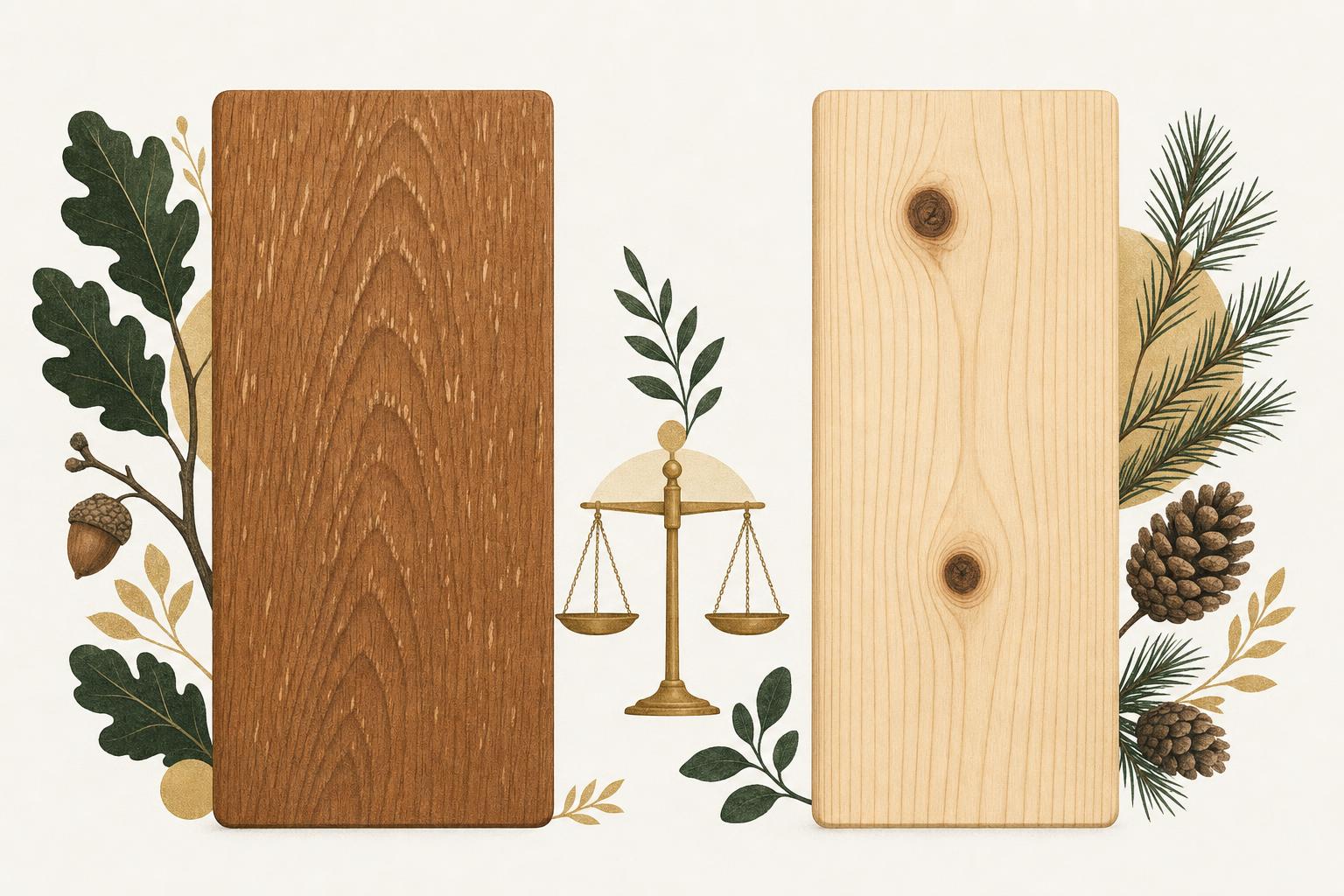
Red oak vs white oak
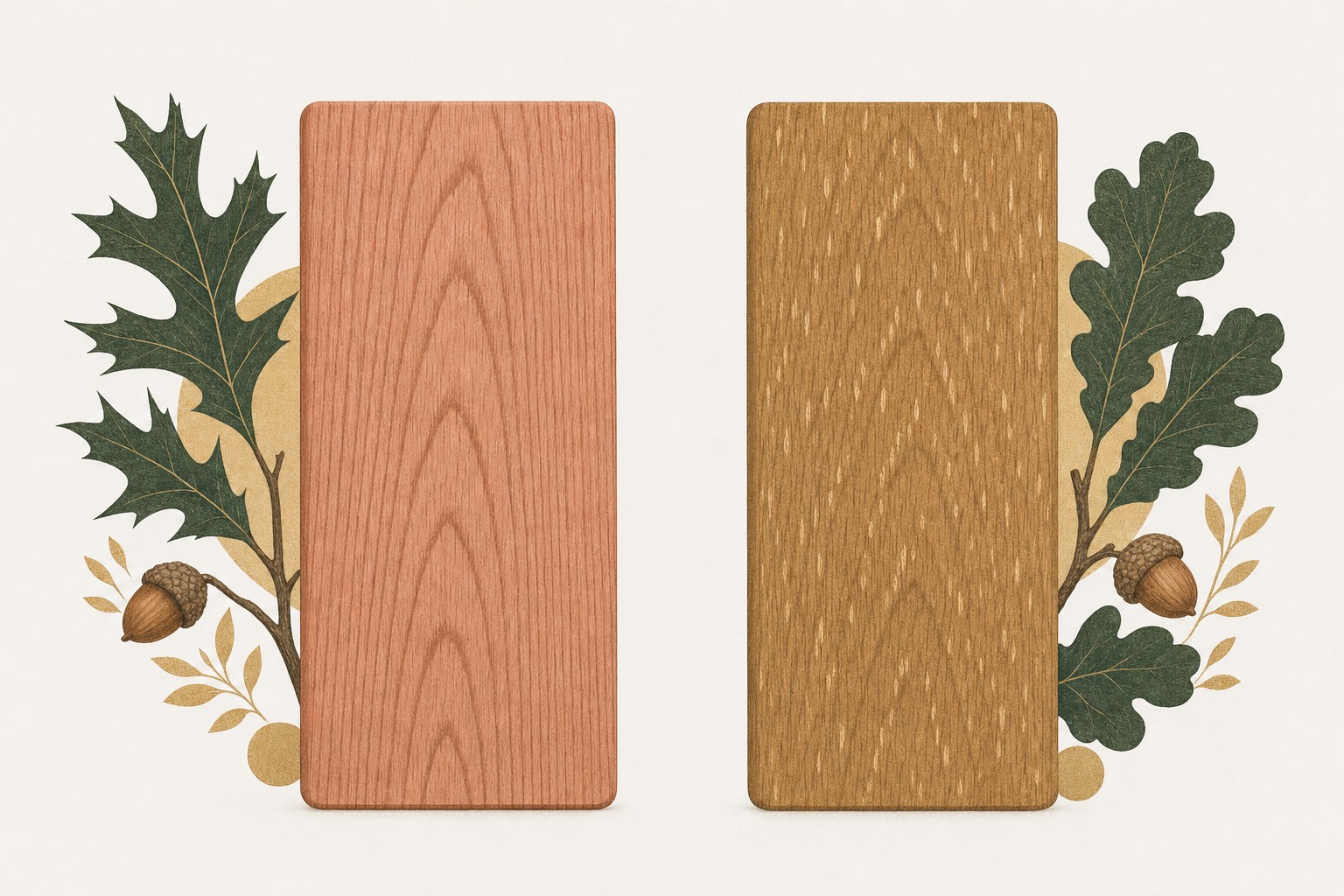
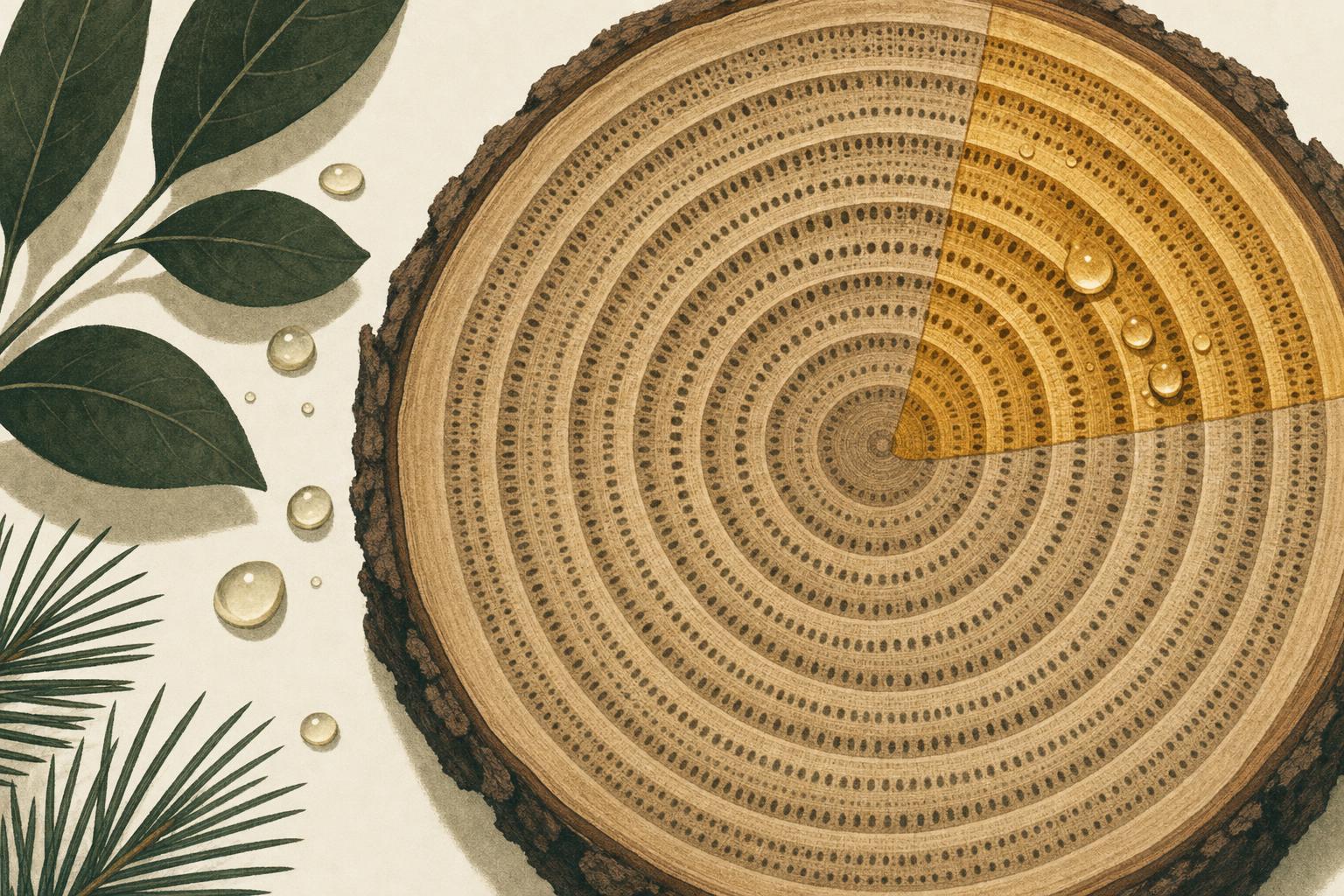
Red oak and white oak look alike on the face, but the end grain splits them in seconds: white oak's pores are plugged with tyloses and look filled, red oak's are open tubes you can blow air through. White oak also shows longer rays, a browner tone and better water resistance, which is why it costs more and goes outdoors. Red oak is pinker, cheaper and perfectly good indoors.
- Clean up the end grain. Crosscut or sand the end of the board so the pores are crisp and open to view.
- Look into the pores. Open, empty pores mean red oak. Pores filled with a glassy froth (tyloses) mean white oak.
- Measure the rays on the face. On flatsawn faces, white oak rays run long, often over 3/4 inch; red oak rays are short, usually under 1/2 inch.
- Check the color. Red oak usually has a pink or reddish cast. White oak is tan to olive brown.
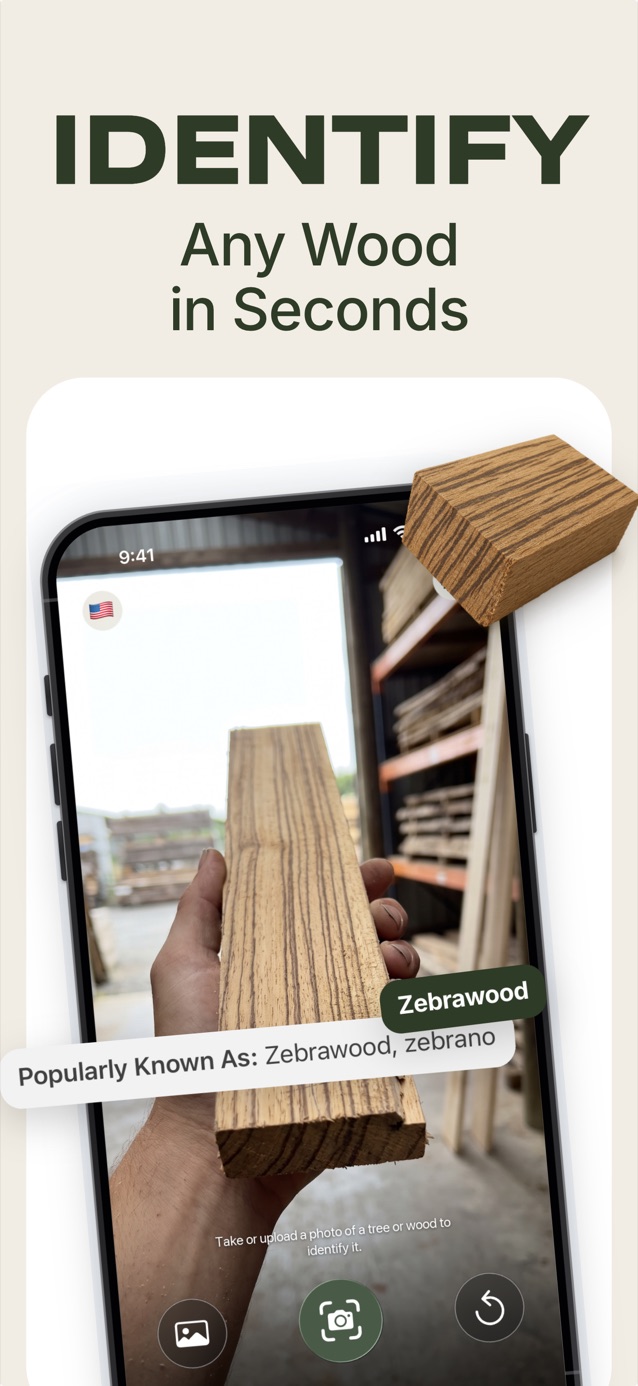
- Confirm with a photo. Photograph the end grain in daylight and let LasWood confirm the species and its profile.
The differences that matter
Hardness is close: red oak is about 1290 on the Janka scale, white oak about 1360. The bigger gap is water. White oak's plugged pores make it nearly watertight, which is why it has been used for barrels, boats and outdoor furniture for centuries. Red oak's open pores wick moisture, so it rots quickly outdoors and stains black around wet spots. Red oak takes stain more evenly; white oak takes fuming and modern natural finishes beautifully.
Which oak for which project
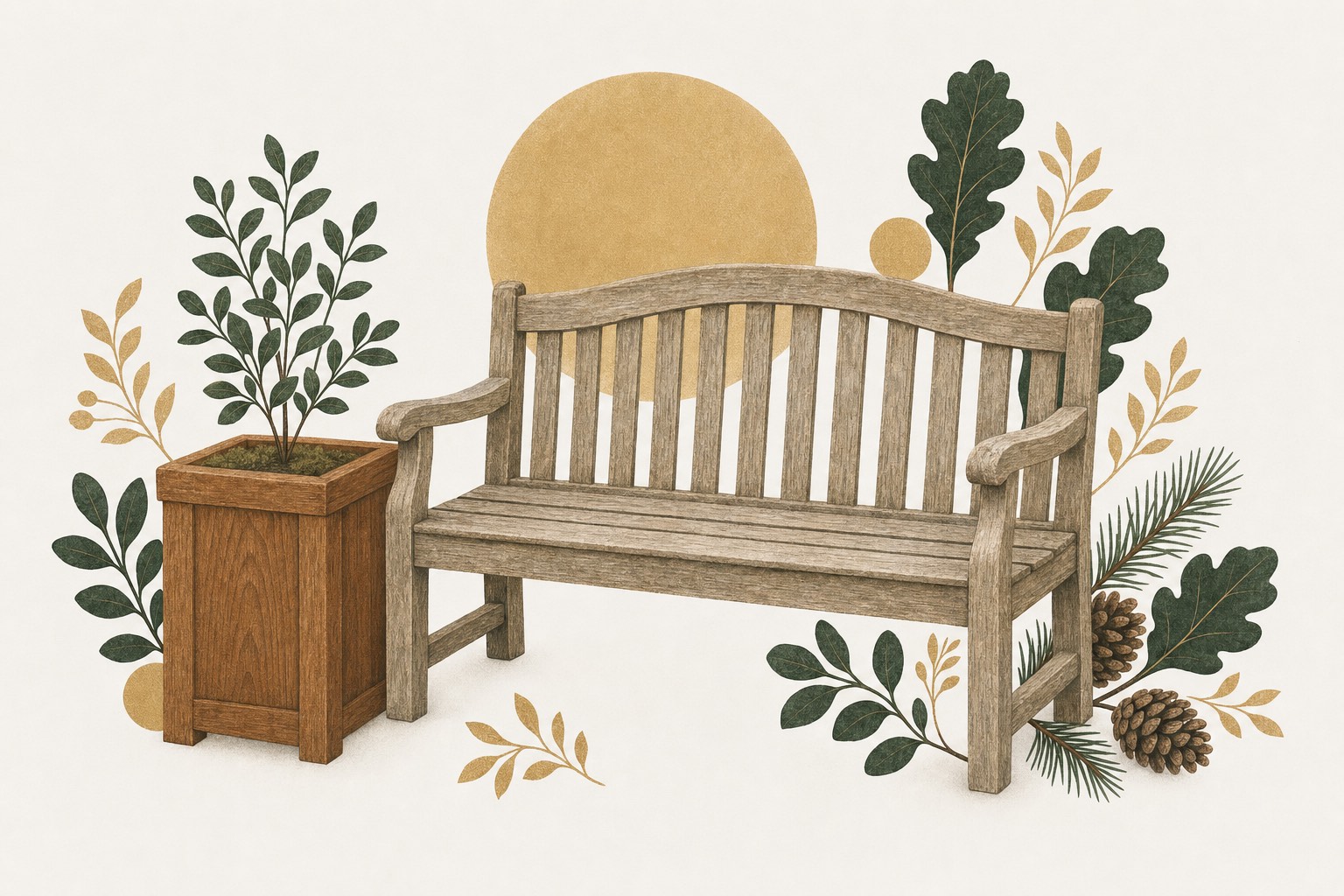
Choose white oak for anything wet or outdoors: garden benches, boat parts, exterior doors, bathroom vanities and kitchen surfaces near the sink. It is also the wood of quartersawn Arts and Crafts furniture, with bold ray flecks. Choose red oak for indoor furniture, cabinets, trim and stained floors, where it saves money and looks traditional. On a budget, red oak carcasses with white oak only where water lands is a sensible split.
The trees tell you too
If you can see the tree, the leaves settle it. Red oak group leaves have pointed lobes tipped with tiny bristles; white oak group leaves have rounded lobes with no bristles. Red oak acorns take two seasons to mature and taste bitter; white oak acorns mature in one. LasWood reads leaves and bark with the same camera flow as boards, so the tree in the yard and the lumber on the rack use one app.
When the label says only "oak"
Lumberyards and flooring stores often sell mixed red oak as just "oak", and white oak at a premium. Before paying the premium, or building something that lives outside, photograph a clean end and let LasWood confirm which oak you have, with hardness and finishing notes attached.
Questions people ask
Is white oak or red oak better for floors?
Both make durable floors. White oak is slightly harder, more water tolerant and suits modern natural finishes; red oak is cheaper and its pink tone suits warm, traditional stains.
Can I use red oak outdoors if I seal it?
Not for long. The open pores draw in water wherever the finish wears, and red oak rots quickly. Use white oak, teak, cedar or another durable species outside.