How to identify wood by end grain
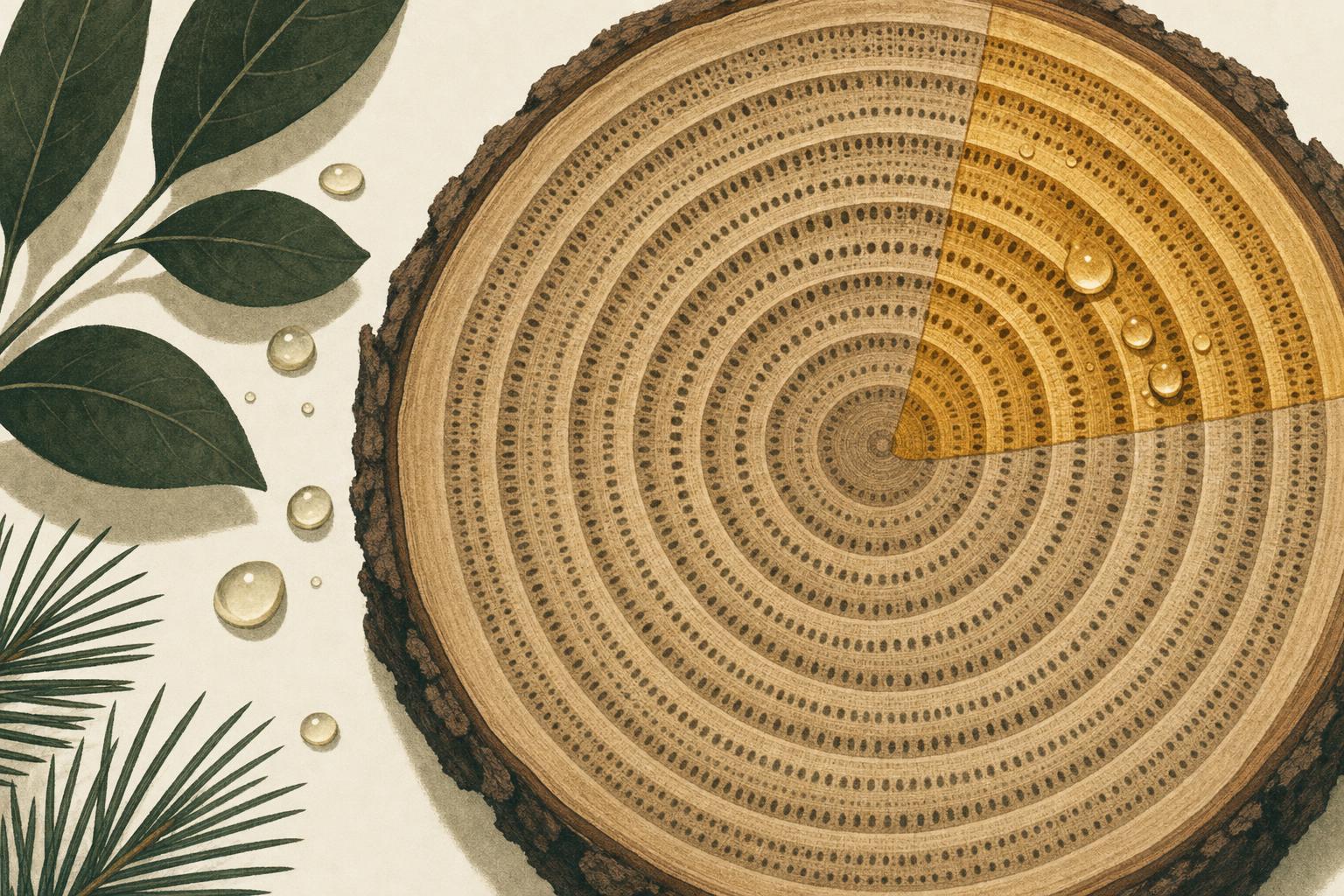
End grain identification works because the cross-section of a board is a fingerprint: the size, spacing and arrangement of pores inside each growth ring differ by species far more than surface color does. Sand the end clean, wet it lightly, and the pattern becomes readable to your eye and to a photo identifier.
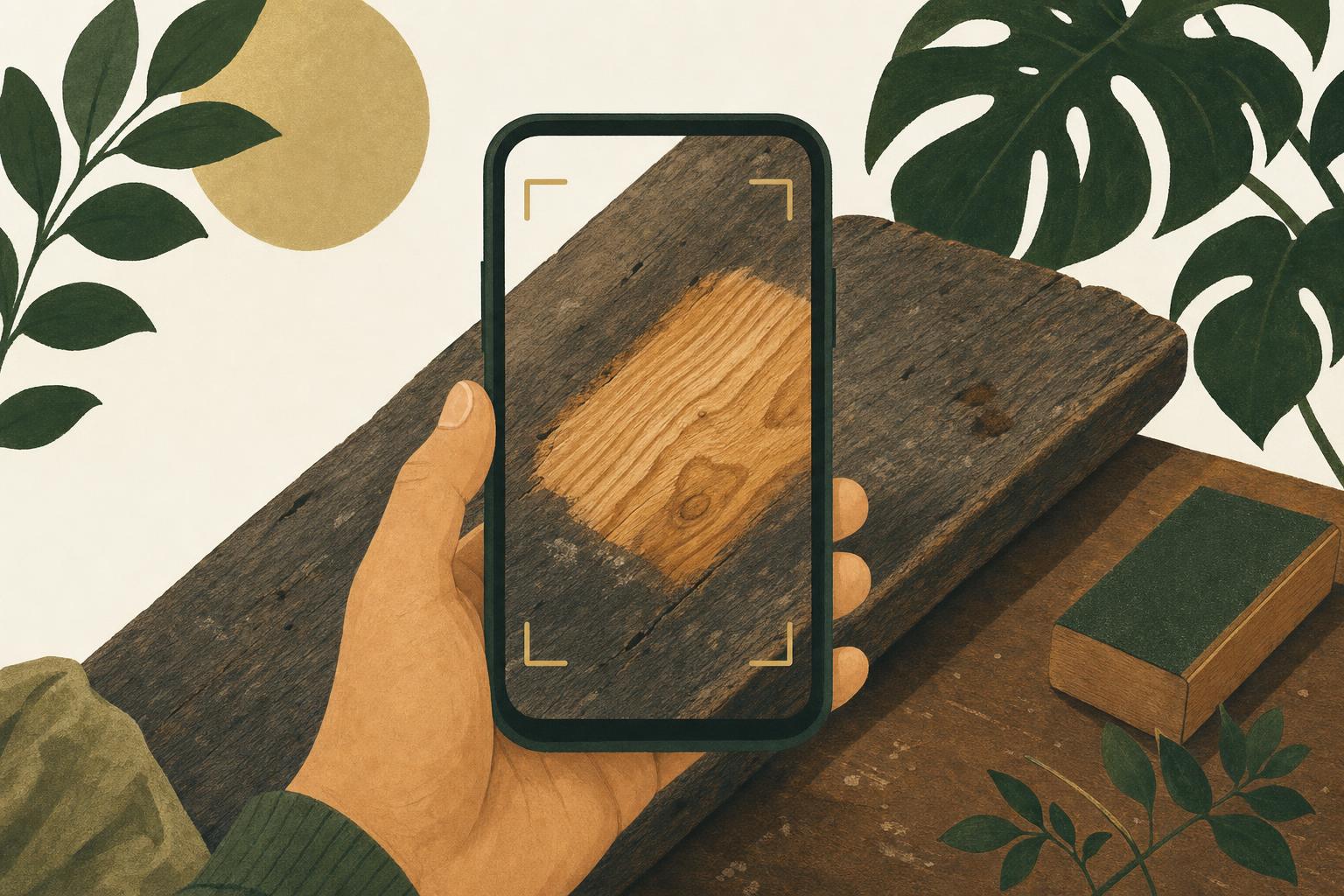
- Cut or sand a fresh end. Old ends are oxidized and clogged. A sharp crosscut or a pass with 220-grit sandpaper exposes the true structure.
- Wet the surface. A wipe of water or rubbing alcohol raises contrast so rings and pores stand out.
- Look at the pore arrangement. Pores in bands along each ring means ring-porous, oak or ash. Even scatter means diffuse-porous, maple or cherry. No pores at all means a softwood.
- Photograph it straight on. Fill the frame with the end grain in daylight and let LasWood match the pattern to a species.
Three patterns cover most boards
Ring-porous woods concentrate large pores in the earlywood of each ring, leaving dense bands between them: oak, ash and elm read as clear stripes of holes. Diffuse-porous woods scatter small, even pores across the whole ring: maple, cherry and birch look almost uniform. Semi-ring-porous woods like walnut grade from larger to smaller pores across the ring. Softwoods show rings but no pores at all.
Details that split lookalikes
Red oak versus white oak is the classic case. Both are ring-porous with near-identical faces, but white oak's pores are plugged with froth-like tyloses while red oak's are open. Blow through a red oak offcut into soapy water and it bubbles; white oak will not. Ash mimics oak's banding but lacks oak's broad rays, the lines radiating from the center of the tree.
From pattern to species name
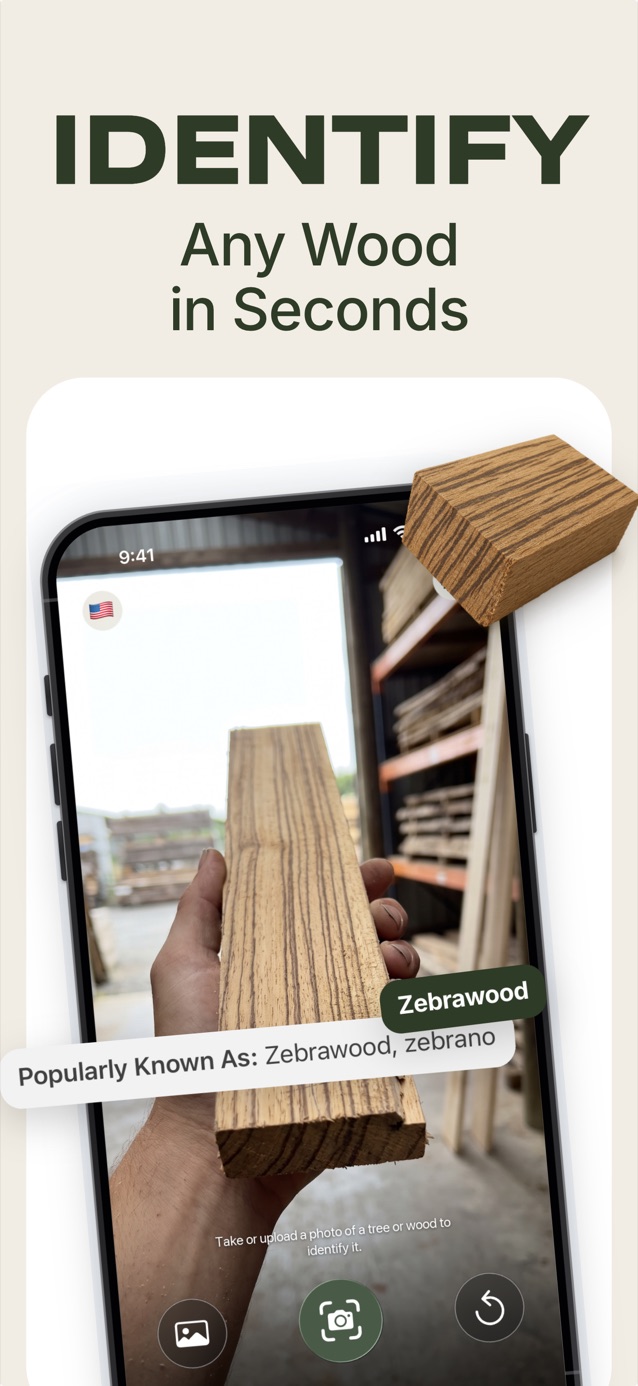
Reading the pattern class takes practice; matching it to one of hundreds of species takes a reference. That used to mean a hand lens and a copy of a wood anatomy text. A trained image model compresses the same comparison into seconds, and because LasWood returns the scientific name, you can cross-check the answer anywhere. The Tree Chat screen keeps the conversation attached to the photo, so follow-ups like "will it take stain evenly?" land in context.
Questions people ask
Do I need a hand lens for end grain identification?
It helps for tiny-pored species, but a phone camera close-up does the same job. Most ring-porous versus diffuse-porous calls are visible to the naked eye on a clean, wetted end.
Why wet the end grain before reading it?
Water darkens the dense fibers more than the open pores, boosting contrast. The rings and pore bands jump out the way lettering does on a wet sidewalk stamp.